

Much of HR work still lives in spreadsheets, email, documents, and manual workarounds — not because it doesn’t matter, but because traditional software was too expensive and too rigid to solve every problem.
AI changes that.
Orca combines the speed and adaptability AI makes possible with the security, permissions, workflows and governance real HR software requires.
Maybe it’s a workflow your team still manages manually.
Maybe it’s a decision that takes too much research.
Maybe it’s something you wish your team could do, but today’s software simply doesn’t make possible.
Tell us the problem. You don’t need to know what the software should look like.
A request comes in by email.
Someone updates a spreadsheet.
A manager has to approve something.
Someone has to remember what happens next.
Some opportunities here are obvious — turn a manual process into a real application. Others are new: give HR capabilities that were never practical before, like analysis, decision support, or answers that used to take hours of research.
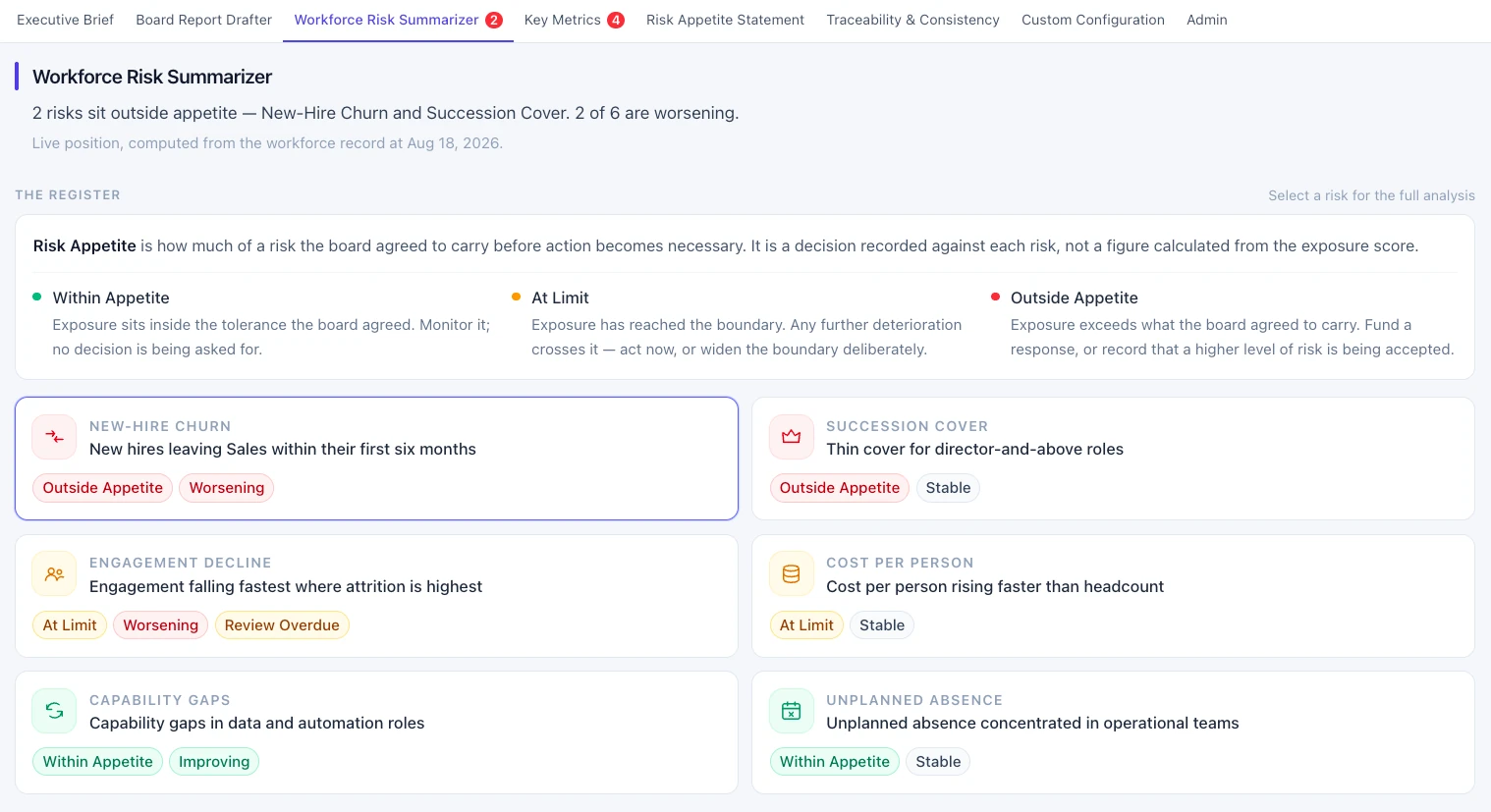
A live workforce risk view computed from company data and measured against agreed thresholds. Demo data.
There is an enormous difference between “AI can probably do this” and “our team can trust this to run real HR work.”
Orca is built on a backend platform we’ve operated for more than four years, with SOC 2 Type II compliance since 2022. New applications inherit secure data, permissions, approvals, workflow state, audit history and integrations rather than rebuilding them every time.
That’s what lets us move quickly without treating production HR software like a vibe-coded prototype — and it means your security review starts from a report, not a promise.
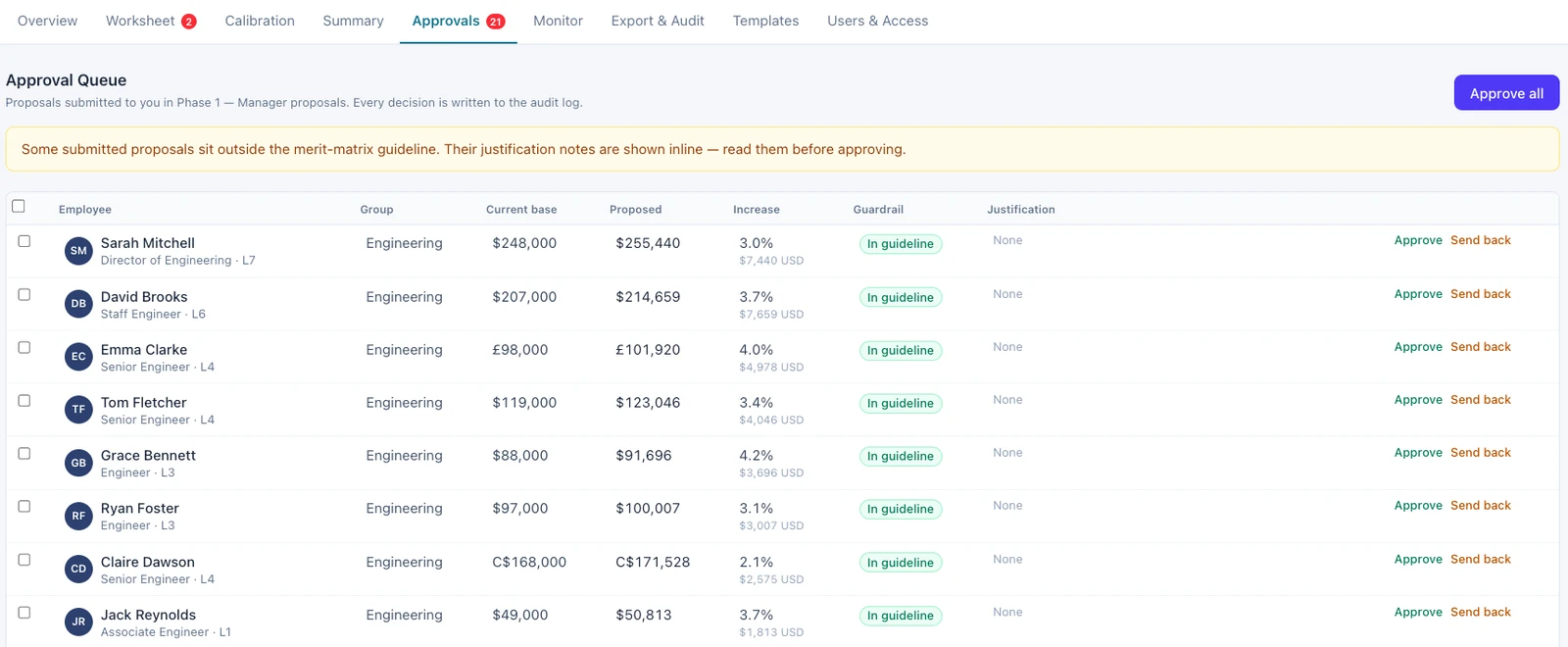
Approvals, guardrails and justifications on the record — and every decision written to the audit log. Demo data.
A typical business application asks one question: can this person access the application? HR has to ask a much harder one: exactly what information should this person be allowed to see or change inside it?
Orca governs access by user, role, record, field and context — down to the equivalent of a single spreadsheet cell for a single person. A manager, an HR business partner, Finance and the employee can all work the same case and each see something different.
That matters more once AI is involved. An AI-powered application shouldn’t only know what it can do — it has to respect what each user is allowed to know.
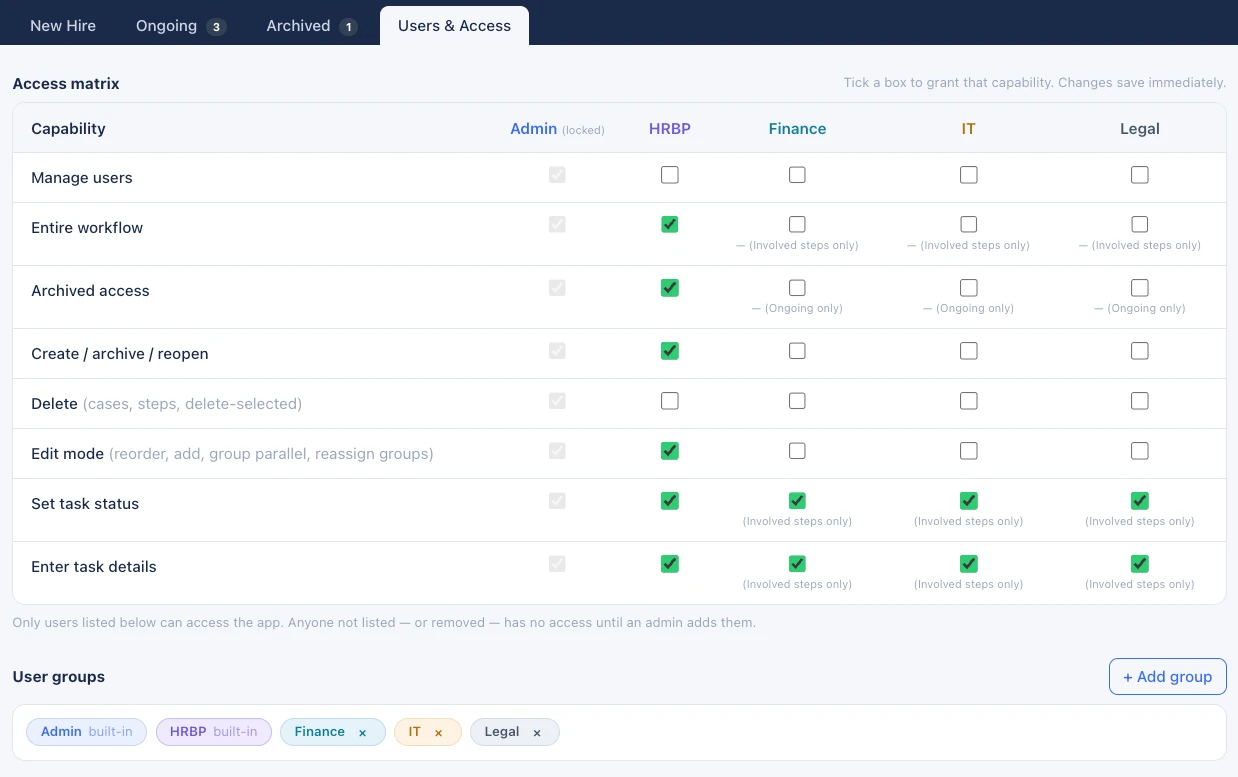
Permissions are configured at the data level rather than rebuilt separately for every application.
We’ve already built more than ten functional HR applications on Orca, from broad multi-user systems to narrow single-purpose tools.
We want to answer that with real HR teams doing real work.
We’re selecting a small group of HR teams over the coming weeks — teams willing to use Orca on real work and help us find the problems that deserve to become products.
We’re not taking custom software orders. We build where we see an important underlying problem repeat across companies. If yours turns out to be unique to you, we’ll tell you honestly and we won’t build it.
You don’t need to be technical. You don’t need a product specification. Come with the problem.